




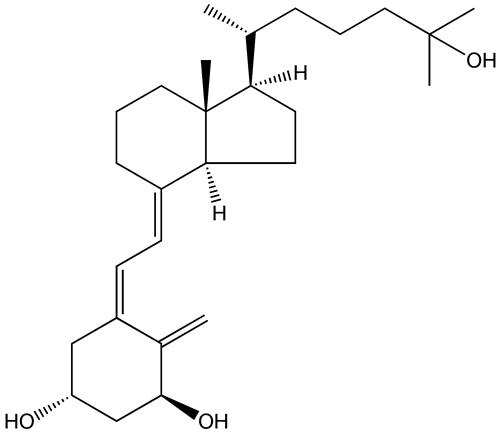
(1R,3S)- 5-[2-[(1R,3aR,7aS)-1- [(2R)-6-hydroxy-6-methyl-heptan-2-yl]-7a-methyl-2,3,3a,5,6,7-hexahydro-1H- inden-4-ylidene]ethylidene]-4-methylidene-cyclohexane-1,3-diol
Absorption
Oral
Rapidly absorbed from the intestine. T max is 3 to 6 h.
Distribution
Approximately 99.9% protein bound. Excreted in breast milk in low levels.
Metabolism
The first pathway involves 24-hydroxylase to produce calcitroic acid; the second pathway involves hydroxylation and cyclization. Calcitrol also undergoes enterohepatic recycling.
Elimination
The t ½ is about 5 to 8 h. About 27% is excreted in the feces and 7% in the urine within 24 h.
Special Populations
Renal Function Impairment
The t ½ is increased by at least 2-fold.
Children
The t ½ is prolonged.
Calcium supplements
Avoid uncontrolled intake of additional calcium-containing preparations.
Cholestyramine
May reduce intestinal absorption of fat soluble vitamins.
Ketoconazole
May reduce endogenous calcitriol concentrations.
Magnesium
Magnesium-containing products may cause hypermagnesemia and should be avoided during calcitriol administration to patients on chronic renal dialysis.
Phenytoin/Phenobarbital
Inhibits endogenous synthesis of calcitriol, therefore may require higher doses if given simultaneously.
Phosphate-binding agents
Because phosphate transport in the intestine, kidneys, and bones may be affected, the dosage of phosphate-binding agents must be adjusted based on serum phosphate concentration.
Thiazides
Known to induce hypercalcemia by the reduction of calcium excretion.
Vitamin D
To avoid possible additive effects and hypercalcemia, withhold pharmacologic doses of vitamin D and its derivatives.
2. 孕婦使用要格外小心。孩童的安全性與功效,尚未確定。
3. 留意嘔吐,虛弱,或肌肉或骨頭疼痛,因為這些症狀可能表示高鈣血。
1. Vit.D依賴型佝僂症或低磷血佝僂症。(應附醫學中心之診斷證明)
2. 副甲狀腺機能低下症。(應檢附病歷影本)
3. 慢性腎臟病引起之低血鈣症,並限eGFR小於45mL/min/1.73 m2,或PTH-i大於正常值三倍以上,血中鈣濃度在10.5mg/dL以上病例不可使用,每6個月須檢測病人血中鈣磷乘積,若血鈣*血磷>55mg2/dL2者不可使用。(109/10/1、110/12/1)。
4. 停經後婦女患有脊椎壓迫性骨折或髖骨骨折病患。
